
 Chinese
 Russian
 Arabic
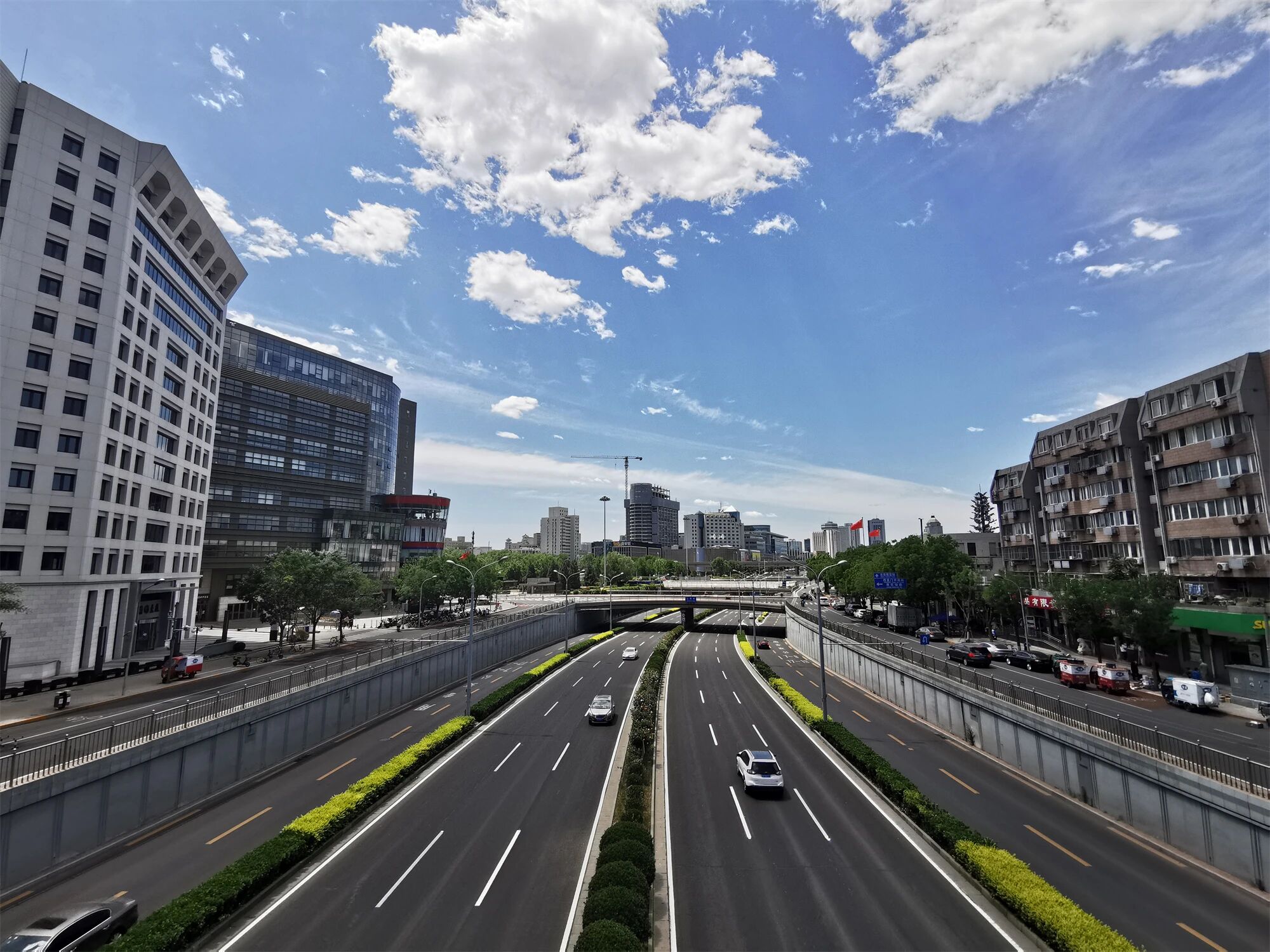
The east wind returns with spring, and Vientiane begins to be renewed. In March, when everything competes, the 2026 National Two Sessions will arrive as scheduled.
The "14th Five-Year Plan" came to a successful conclusion, and the "15th Five-Year Plan" curtain has just begun. As a pillar industry of the national economy, the automobile industry has always attracted much attention from all parties. From the government work report to the "Outline of the Fifteenth Five-Year Plan for National Economic and Social Development (Draft)"(referred to as the "Outline"), automobiles can be seen between the lines; the suggestions of the representative members are also full of confidence and expectation for the transformation and upgrading of the automobile industry.
When promoting high-quality development becomes one of the major strategic tasks of the 15th Five-Year Plan, and when the strategic basis of expanding domestic demand is frequently mentioned, the tasks facing the automobile industry seem to be even heavier. The industry will surely build a solid industrial foundation with technological breakthroughs, activate consumption potential through transformation and upgrading, enhance competitive strength through open cooperation, and inject strong and lasting automobile power into cultivating new quality productivity.
Expand domestic demand and coordinate preparations to activate new vitality of automobile consumption
Against the background of deepening the impact of changes in the external environment and weak momentum of the world economy, this year's government work report once again prioritizes "insisting on expanding domestic demand". The report proposes to adhere to the leadership of domestic demand, coordinate consumption promotion and investment expansion, expand new space for domestic demand growth, and better leverage my country's ultra-large-scale market advantages. The "Outline" also focuses on enhancing the endogenous power and reliability of the domestic cycle and vigorously boosting consumption.
In recent years, driven by a number of policies such as replacing old cars with new ones and pilot reform of automobile circulation and consumption, the consumption potential of China's automobile market has been greatly released. In 2025, my country's automobile production and sales will exceed 34 million units, a record high; the total number of cars being exchanged for new ones will exceed 11.5 million units, driving sales of related commodities to exceed 2.6 trillion yuan; new consumption formats such as car rental, car modification, and RV camping will emerge competitively, and consumption restrictions such as car purchase restrictions have gradually been "loosened"... The prosperity and development of the automobile market has provided solid support for the smooth operation of my country's economy.
In 2026, my country will implement in-depth special actions to boost consumption. Promote the expansion and upgrading of commodity consumption, arrange ultra-long-term special treasury bonds of 250 billion yuan to support the exchange of old consumer goods for new ones, and optimize the policy implementation mechanism. Implement actions to improve the quality of service consumption and benefit the people, create a number of new consumption scenarios with wide driving and high visibility, and accelerate the cultivation of new consumption growth points. Activate offline consumption and stimulate consumption vitality in the sinking market. Clean up unreasonable restrictive measures in the consumption field. With the gradual implementation of a series of policies such as replacing old cars with new ones, promoting green consumption, and cultivating new growth points for service consumption in 2026, my country's automobile market is bound to usher in a new round of growth.
Consumption does not just stop at the purchase process, but also runs through the entire cycle of experience. In this regard, the government work report pointed out that we should optimize county infrastructure layout and public resource allocation and promote urban renewal with high quality. The "Outline" also clarifies that we must adhere to moderate and not excessive advance, and strengthen overall infrastructure planning. In this regard, Feng Xingya, a representative of the National People's Congress and Secretary of the Party Committee and Chairman of GAC Group, proposed to speed up the improvement of rural energy replenishment networks, promote the sinking of after-sales outlets and strengthen talent and equipment guarantees, optimize fiscal, taxation and financial support, and fully release the consumption potential of rural new energy vehicles; The power replacement model has the advantage of efficient energy replenishment, so it is recommended to coordinate the layout of the entire power replacement network.
Embracing AI innovation and leading the creation of a new form of intelligent economy
"The 'key variable' of artificial intelligence is becoming a 'strong increase' in high-quality economic development." Li Lecheng, Minister of Industry and Information Technology, gave an authoritative interpretation of the first "Ministerial Channel", which vividly demonstrated the magnificent picture of AI comprehensively empowering thousands of industries, and emphasized that efforts should be made to promote the research and iteration of new generation artificial intelligence products such as autonomous vehicles. The "Outline" clearly states that during the "15th Five-Year Plan" period, the "Artificial Intelligence +" action must be fully implemented to seize the commanding heights of artificial intelligence industry application, and comprehensively empower thousands of industries. This year's government work report also emphasized the need to create a new form of intelligent economy, deepen the expansion of "artificial intelligence +", and promote the commercial and large-scale application of artificial intelligence in key industries.
As a core industry deeply integrated with AI, the automobile industry is fully embracing AI and accelerating the intelligent transformation of automobiles. Li Shufu, member of the National Committee of the Chinese People's Political Consultative Conference and chairman of Geely Holding Group, said that the automobile industry has fully applied AI technology, including not only technical fields such as chassis, cockpit, and smart driving, but also widely used AI technology in personnel training, after-sales service, and operation management.
In order to accelerate the development of autonomous driving, He Xiaopeng, deputy to the National People's Congress and chairman and CEO of Xiaopeng Automobile, suggested promoting the autonomous driving policy to leap from L2 to L4, simplifying the intermediate links of L3, and releasing greater policy space for technological innovation and business exploration. Accelerate the commercialization of L4 autonomous driving in more areas and more complex scenarios. It is the first to carry out pilot L4-level driverless applications for the C-terminal in low-risk scenarios such as driverless charging and car washing at night, and unmanned parking and picking up vehicles in parking lots.
Yang Yongxiu, a representative of the National People's Congress and senior technician of FAW's R & D and Trial Production Institute, suggested accelerating the construction of a legal standard system that adapts to industrial changes, investigating and drafting the "Autonomous Driving Law" and amending the "Road Traffic Safety Law" to clarify the division of responsibilities and the timetable for entry into force, and promote The national unified autonomous driving test standard achieves "one-time test, universal nationwide".
Focusing on the safety issue of smart driving, Lei Jun, a representative of the National People's Congress and founder, chairman and CEO of Xiaomi Group, suggested accelerating the construction of intelligent technical standards for automobiles and optimizing motor vehicle driving assessment projects; improving the multi-party collaborative governance system and jointly building smart vehicles. Traffic safety system for the era; strengthen the publicity and popularization of intelligent driving safety. Zhang Tao, member of the National Committee of the Chinese People's Political Consultative Conference and director of BMW Brilliance Tiexi Factory, also said that by building a unified data standard and sharing platform, improving responsibility division and insurance mechanisms, and promoting the construction of the "Intelligent Driving Ecological Alliance", we can build a "safe and ecological" system for intelligent driving.
Yao Zuoping, a representative of the National People's Congress and secretary of the Party Committee and deputy general manager of SAIC-GM-Wuling, said that artificial intelligence has become the core engine driving industrial transformation. As the first large-scale application scenario for the integration of artificial intelligence and the physical world, intelligent driving is not only the focus of technological competition., it is also one of the three trillion-level consumption areas that my country will strive to form before 2027, and it is the key to seizing the commanding heights of a new round of scientific and technological revolution.
Cultivating and strengthening emerging industries and future industries is the key to building a modern industrial system and consolidating and strengthening the foundation of the real economy. The government work report pointed out that building emerging pillar industries and future industries such as low-altitude economy and specific intelligence will undoubtedly bring new development opportunities to car companies that promote cross-border integration and transform into AI technology companies.
Facing the development of the embodied intelligence industry, many representatives and members said that the current embodied intelligence is still on the eve of industrial scale. In this regard, Qi Xiangdong, member of the National Committee of the Chinese People's Political Consultative Conference, vice chairman of the All-China Federation of Industry and Commerce, and chairman of Qianxin Group, suggested that the decision-making layer, execution layer, and physical layer should be solved from three aspects: building exclusive security protection systems, ensuring the security of data assets, and forging high-level practical combat capabilities. Focusing on security, privacy and ethical challenges, Zhou Yunjie, a representative of the National People's Congress and chairman and CEO of Haier Group, suggested improving the artificial intelligence standard system, strengthening prevention and control at the source of technology, building a co-governance ecosystem, jointly carrying out a "supervision sandbox" pilot, and guiding the establishment of an "ethical governance alliance" to form a benign ecosystem of diverse co-governance.
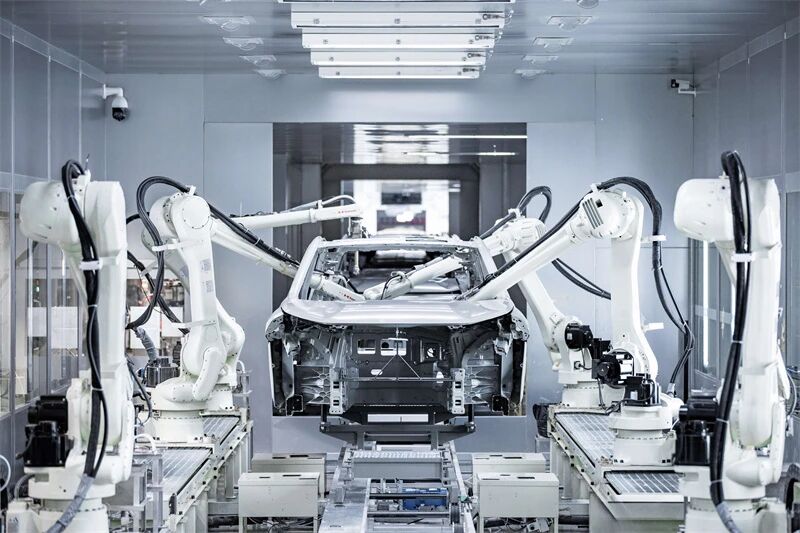
Reform breaks down the situation and opening up empowers and shapes a new pattern of industrial development
To enhance the driving force and vitality of high-quality development, we must continue to deepen reforms in key areas. The government work report proposes to formulate and implement plans to further deepen the reform of state-owned assets and state-owned enterprises, promote the optimization of the layout and structural adjustment of the state-owned economy, improve the supporting laws, regulations and policies of the Private Economy Promotion Law, and legally and institutionally ensure equal use of production factors, fair participation in market competition, and effective protection of legitimate rights and interests.
The "Outline" also includes "deepening the reform of state-owned assets and state-owned enterprises" and "developing and strengthening the private economy". For the automobile industry, while further deepening the reform of state-owned assets and state-owned enterprises, while increasing the protection of the legitimate rights and interests of private enterprises, it will surely fully stimulate the innovation vitality of the entire industry and drive the automobile industry to accelerate changes.
Industrial transformation and upgrading is based on fair competition and sustainable development. In recent years, short-sighted behaviors such as disorderly competition and price chaos have spread in key industries such as automobiles, which not only causes waste of resources and inefficiency, but also seriously restricts the healthy and sustainable development of related industries and hinders a virtuous cycle of the national economy. This year's government work report once again included the rectification of "convoluted" competition. From "comprehensive rectification" to "in-depth rectification", the rectification efforts have been increased layer by layer and the governance orientation has been consistent, fully demonstrating the country's firm determination to promote the construction of a unified national market in depth.
While deepening reforms, further expanding high-level opening up to the outside world is also one of the key tasks of the government's work this year. At present, my country's automobile exports have reached a new level of 7 million vehicles, and its status as the world's largest automobile exporter continues to be solid. How to further leap towards "ecological seas" has become a topic of concern to many representatives and committee members.
Zhu Huarong, a representative of the National People's Congress and Secretary of the Party Committee and Chairman of China Changan Automobile Group, suggested that the internationalization of China standards should be promoted, cross-border pilots should be deepened, and the Ministry of Industry and Information Technology should take the lead in building a basic common database of overseas automobile markets and building a risk early warning system to protect the globalization process of automobile companies.
Yin Tongyue, a representative of the National People's Congress and Secretary of the Party Committee and Chairman of Chery Automobile Co., Ltd., proposed that China automobile companies cannot just pursue sales when going abroad, but must achieve the leap from "going global" to "going up and integrating in." He suggested accelerating the establishment of a unified automobile export quality standards and certification system at the national level, strengthening overseas safety management of new energy vehicles, establishing international standards for data security, and protecting China brands from going to sea with high standards.
As a major exporter, Chery has rich experience in overseas operations. Yin Tongyue said that China automobiles must adhere to localized operations, respect local regulations and culture, deeply integrate technology, management and culture into the local market, and achieve win-win cooperation. He emphasized that "going global" is not a simple export of products, but an export of China's automobile industry capabilities and national image. It is necessary to build a globally recognized China brand with long-term approach.
Focus on scenarios and strengthen standards to help achieve carbon peak as scheduled
According to the "double carbon" goal, my country will achieve its carbon peak goal before 2030, that is, during the "15th Five-Year Plan" period. In this regard, the "Outline" clearly emphasizes the need to coordinate development and emission reduction, solidly carry out carbon peaking actions, accelerate the adjustment and optimization of industrial structure, energy structure, transportation structure, etc., to ensure that carbon peaking goals are achieved as scheduled; promote energy conservation and carbon reduction in key areas, accelerate the formation of green production and lifestyle, and form new green production methods and new lifestyles.
Whether it is promoting cost reduction and efficiency improvement, low-carbon transformation of the entire industrial chain, or accelerating the formation of a green production and lifestyle, the automobile industry shoulders the important mission of helping the "double carbon" goal to be implemented as scheduled. The government work report proposes to cultivate new growth points such as hydrogen energy and green fuels. In this regard, many automobile industry representatives have put forward relevant suggestions.
Zhang Guoqiang, deputy to the National People's Congress and chairman of Yihuatong, suggested that hydrogen energy should be carried out from four aspects: strengthening the top-level design of the national hydrogen energy high-speed demonstration, increasing support for hydrogen energy high-speed demonstration, appropriately advancing the layout of hydrogen energy high-speed infrastructure, and deepening coordination and linkage. High-speed demonstration will accelerate hydrogen energy and fuel cell vehicles to break through bottlenecks in industrial development and explore market-oriented commercial operation models. At the same time, he also suggested accelerating the construction of a national unified carbon trading market so that emission reductions can generate tangible economic value and inject new momentum into the development of green industries.
"Road transportation accounts for more than 70% of my country's total freight transport, but the energy consumption and emission problems caused by traditional diesel trucks have become increasingly prominent." Focusing on energy conservation and emission reduction in the commercial vehicle field, Li Shufu suggested that priority should be given to promoting methanol electric operating trucks in the field of transportation, giving full play to their advantages in economy, environmental protection, and convenient energy replenishment, especially in medium-and long-distance and unscheduled freight scenarios. At the same time, methanol filling facilities should be deployed along key logistics channels such as expressway service areas and provincial highways to create a green and low-carbon freight demonstration corridor to provide strong support for achieving the "double carbon" goal in the transportation field.
The blueprint has been drawn, and it is time to forge ahead. The government work report clarifies the key tasks of the automobile industry this year, and the "Outline" points out the direction for the high-quality development of China's automobile industry during the "15th Five-Year Plan" period. From activating domestic demand to technological breakthroughs, from ecological reshaping to green transformation, China's automobile industry will closely follow the national strategic deployment, adhere to the original mission of high-quality development, anchor the goal of becoming a strong automobile country, and strive to write a new chapter in industrial transition.
This article is reproduced from China Auto News and is only used for information sharing. If infringement is involved, please contact and delete it. This site does not bear relevant legal responsibilities.

 Online Evaluation
 I am Buyer
 Export Services
 subsites


 023-62852688
  No. 1-1, No. 2899, Longzhou Avenue, Banan District, Chongqing City
 Headquarters


