
 Chinese
 Russian
 Arabic
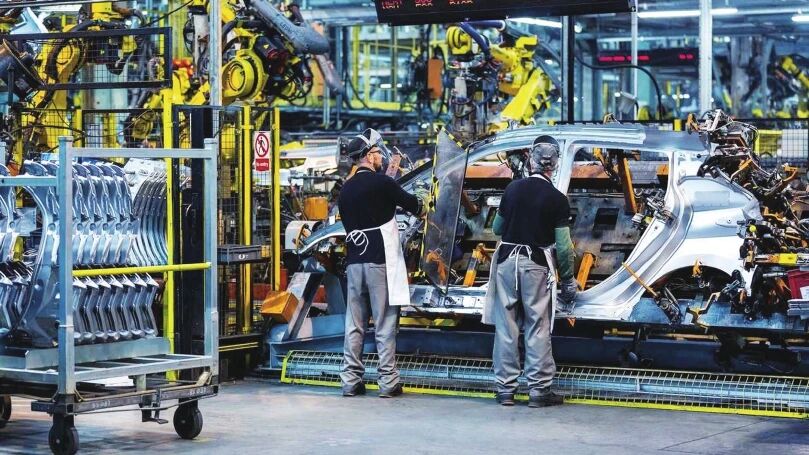
After many postponements, the European Union has finally officially issued the "Industrial Accelerator Act", which will set "Made in the EU" localization content and low-carbon standards for products purchased by public or enjoying manufacturing subsidies, hoping to improve their performance in green industries. International competitiveness. According to a press release issued by the European Commission, the Industrial Accelerator Act proposes to increase the proportion of manufacturing in the EU's gross domestic product (GDP) to 20% by 2035, compared with the current proportion of 14.3%. In the next step, the new proposal will be submitted to the European Parliament and the Council of the European Union for review and approval.
According to reports, the "Made in the EU" localized content requirements apply to key strategic industries and raw material fields. Taking the automobile industry as an example, the complete vehicle must be finally assembled within the EU. More than 70% of the value of non-battery parts of electric vehicles come from the EU, and more than 25% of low-carbon steel and aluminum must be produced in the EU. Only by meeting the above conditions can they enjoy national subsidies and public procurement qualifications.
It is reported that the release of the bill has been postponed many times. It was initially expected to be submitted in December last year, then postponed to January this year, and then postponed to February until it was finally released this time. The release has been delayed many times, mainly due to huge differences within the EU on the bill.
"Made in the EU" triggers internal divisions
In fact, it has been proposed from the beginning that the attitude of EU member states towards "Made in the EU" has been divided.
The "conservatives" represented by France and Italy are the staunch promoters of this policy. Both countries have mature automobile industry chains and have long advocated "Europe first", hoping to use high localization barriers to local car giants such as Renault and Stel-Lantis Group to firmly lock in the EU, while resisting the penetration and impact of foreign brands. In contrast,"liberals" represented by Germany and Sweden are deeply concerned about the initiative. These countries oppose narrow protectionism and believe that it will drive up costs, stifle innovation, harm investment, violate WTO rules, and may trigger global trade retaliation. In particular, the German automobile industry is highly global, and giants such as Volkswagen, BMW, and Mercedes-Benz have huge markets and deep supply chain layouts in China.
In the industry, contradictions are equally acute. European parts suppliers strongly support the 70% localization threshold, because compared with large OEMs with global production layouts and brand premium capabilities, the market competitiveness of parts manufacturers, especially small and medium-sized enterprises, relies more on cost control and localization. Supporting facilities are also more vulnerable to the impact of low-priced external products. This threshold is like a "protective umbrella" for them; while Volkswagen, BMW and other vehicle giants are worried that radical localization requirements will greatly increase costs and disrupt existing supply chains, but instead put themselves in a passive position in global competition.
In the context of the rapid development of electrification technology, excessive emphasis on local content may limit its ability to obtain global advanced technology and low-cost resources, causing technology research and development to lag behind market demand. In addition, European car companies are also worried that this policy may violate the World Trade Organization (WTO) non-discrimination principles, trigger retaliatory measures from major trading partners, and further deteriorate the global market environment.
At the same time, many departments within the EU and some Central and Eastern European countries have also publicly expressed opposition, believing that excessive protectionism will undermine the European single market, dampen foreign investment willingness, push up consumer car prices, and ultimately delay the electrification transformation of the entire EU. The repeated postponement of the release of the bill also shows that the EU is struggling to find a balance between protectionism and market openness.
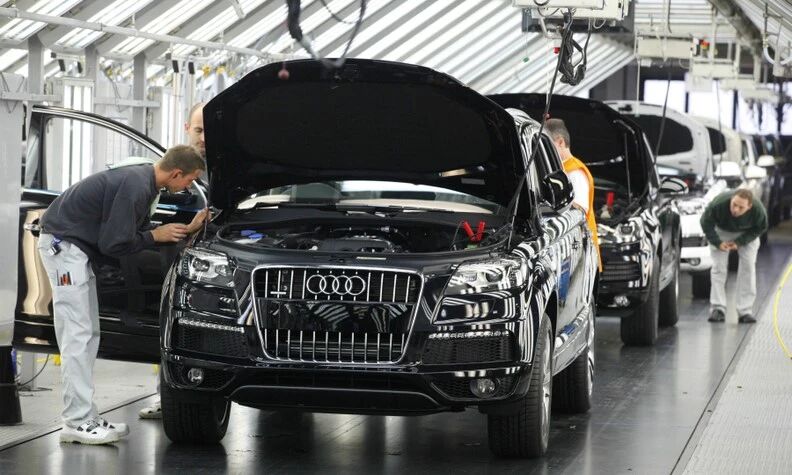
Set a 70% localization threshold
For electric vehicles, the European Commission has set a local content threshold of more than 70%. The core reason why the EU insists on introducing such strict localization clauses under the tremendous pressure of internal divisions and trade disputes is that its automobile industry is facing an unprecedented triple crisis.
First of all, traditional industrial pillars face the risk of hollowing out. As we all know, the automobile industry is the "ballast stone" of the EU manufacturing industry and is directly related to millions of jobs. In the era of fuel vehicles, Europe has an absolute advantage; but under the wave of electrification, core traditional industrial chains such as engines and transmissions are rapidly shrinking. If key components, batteries, and vehicle assembly continue to relocate, the EU will lose its most important industrial fundamentals. In addition, since the introduction of the Inflation Reduction Act in the United States in 2022, its huge tax credits for local manufacturing have attracted a large number of European battery and parts companies to build factories in the United States, exacerbating the crisis of "deindustrialization" in Europe. The 70% threshold is essentially the EU's version of the "local content" requirement, designed to compete with the United States for limited manufacturing resources.
Secondly, the EU is aware that it relies too much on external supply chains and needs to enhance its industrial autonomy. The energy crisis after the Russia-Ukraine conflict has made the EU deeply aware of the fragility of supply chain security. Involving power batteries, motors, electronic controls and a large number of key components, Europe is seriously short of raw materials and local production capacity, and is highly dependent on supplies from Asian countries. Against the background of intensified geopolitical conflicts and elevated supply chain security to a national strategic level, the EU does not want its green transformation to be "stuck" and attempts to build a closed-loop and controllable regional supply chain system.
Finally, the market share of China's electric vehicles in Europe continues to rise, making the EU feel "under great pressure" and "empty pursuit of enemies." Relying on the advantages of vertically integrated supply chains and efficient cost control, China car companies are still extremely competitive even after imposing high tariffs, and are gradually rewriting the competitive landscape of the European electric vehicle market. The EU is aware that traditional trade restrictions have limited effects and must build deeper barriers in terms of subsidies, public procurement, and localization content.
It is worth noting that the European Commission has also added additional conditions for major investments in the EU's green strategic industries worth more than 100 million euros: if a third country accounts for more than 40% of global production capacity in relevant fields, relevant investment projects must Complete the transfer of technology and knowledge, meet local production requirements, and ensure that the proportion of EU employees is no less than 50%. According to European media reports, this restriction is mainly aimed at China, covering areas such as batteries and energy storage, electric vehicles and parts, solar photovoltaics, and the mining, processing and recycling of key raw materials.
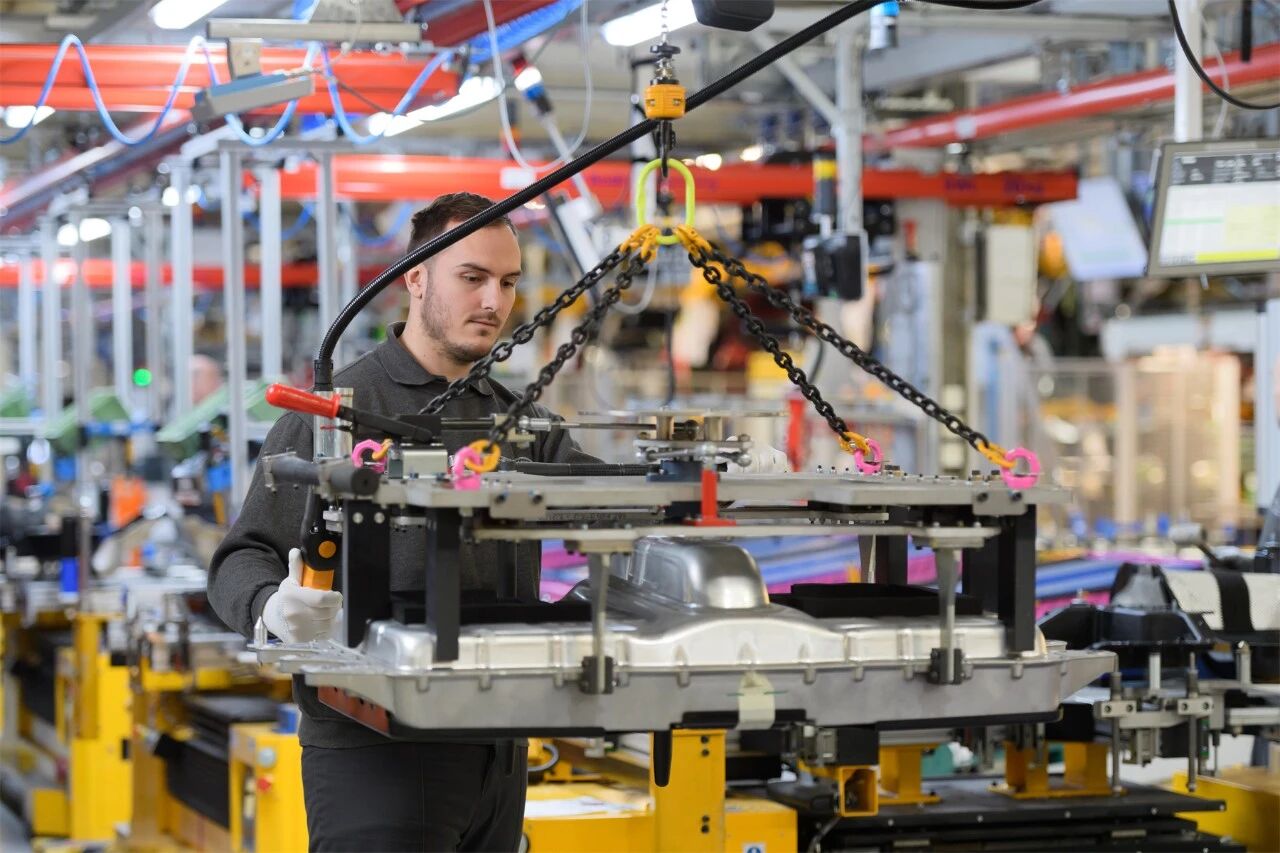
Impact and disrupt global supply chains
It can be seen that the EU will not give up its pursuit of industrial dominance and the protection of local jobs, let alone its power to formulate rules in the era of electrification. Once the 70% localization requirement is implemented, it will have a systemic impact on both global car companies and supply chains, because its essence is a reverse adjustment of the global supply chain, which will lead to rigidity and reduced efficiency of the supply chain.
For local European car companies, they will face huge supply chain adjustment pressure in the short term, and rising costs and pressure on profits are almost inevitable; but in the long run, they may pocket most of their subsidies and public procurement markets, forming a natural competition. With the "moat", the local parts and components system will also gain room for stable growth. For multinational car companies such as Japan, South Korea and the United States, companies that have already deployed production capacity in Europe will speed up the localization of parts and components and consolidate their existing advantages; companies that have not yet deployed in depth will face the risk of being squeezed in market shares.
For China car companies, the model of relying solely on exporting complete vehicles to Europe will encounter obvious bottlenecks. Failure to meet the localization requirements means that the price advantage is weakened and large government procurement orders are lost. However, leading companies are accelerating the localization process in Europe, building vehicle factories in Europe, driving the implementation of supporting production capacity such as batteries and parts, gradually meeting the localization ratio requirements, and shifting from "product going to sea" to "ecological going to sea".
The more far-reaching impact lies in the global supply chain landscape. This move by the EU echoes the U.S. Inflation Reduction Act. The global electric vehicle industry is accelerating from a highly global division of labor to a regionalization and camp closed-loop approach. Supply chain migration, production capacity reconstruction, and investment redistribution may become the main lines of the industry in the next few years.
Despite the grand vision, the implementation of the Industrial Accelerator Act faces huge practical challenges. The first is the bottleneck of raw materials and production capacity. Especially in the fields of battery raw materials, motor controllers, power semiconductors, etc., the European domestic supply chain is really "beyond its reach"; if forced forward, it may lead to insufficient production capacity and extended new car delivery cycles. Secondly, how to clarify the localization proportion is also difficult in implementation. In today's globalized division of labor is extremely meticulous, the origin of a screw is extremely complicated, which will impose a huge administrative burden on regulatory agencies and add a lot of costs to automobile manufacturers. Finally, this policy also faces huge compliance disputes. Strict localization content requirements potentially conflict with global free trade and WTO non-discrimination principles, and are likely to trigger a new round of trade frictions and even be countered by other countries.
Recently, the European Union's China Chamber of Commerce issued a position statement on the EU's Industrial Accelerator Act, saying that it expressed concern and opposition to the far-reaching impact that relevant provisions in the bill may have on market opening, fair competition and China-EU economic and trade cooperation; Call on the EU to effectively safeguard the principles of fairness, justice and non-discrimination in the investment environment in the promotion of relevant legislative processes, and continue to provide an open, transparent and predictable business environment for various market entities, including foreign investment.
This article is reproduced from China Auto News and is only used for information sharing. If infringement is involved, please contact and delete it. This site does not bear relevant legal responsibilities.

 Online Evaluation
 I am Buyer
 Export Services
 subsites


 023-62852688
  No. 1-1, No. 2899, Longzhou Avenue, Banan District, Chongqing City
 Headquarters


