
 Chinese
 Russian
 Arabic
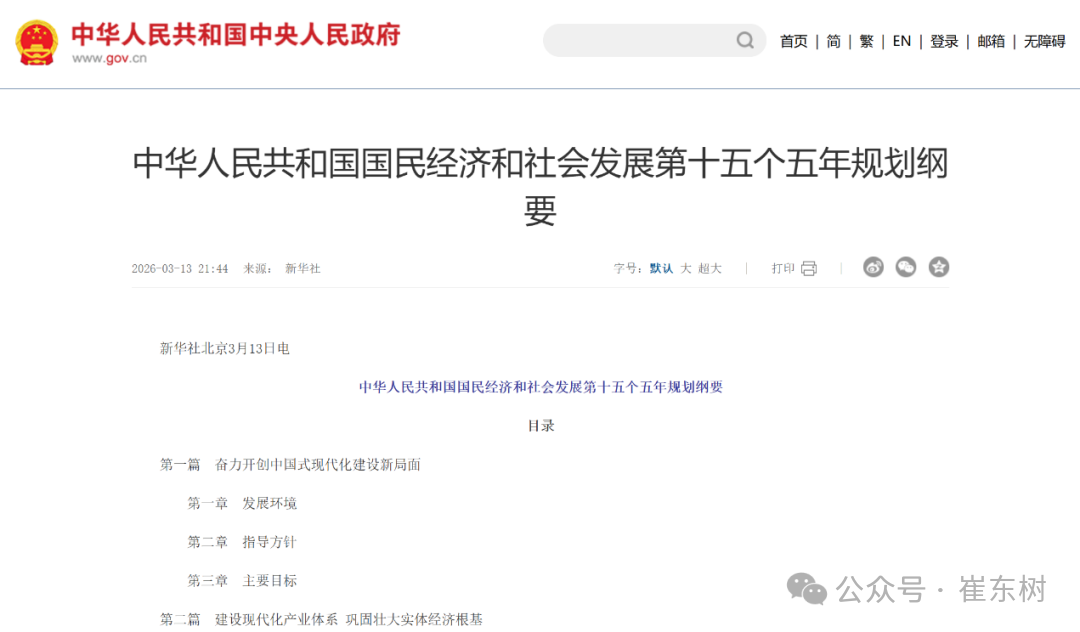
The "Outline of the 15th Five-Year Plan for National Economic and Social Development of the People's Republic of China" was released on March 13. The outline is based on the national industrial strategy and the overall situation of high-quality development. It is the grand blueprint of my country's comprehensive construction of a socialist modern country during the "15th Five-Year Plan" period and is also the fundamental basis for the transformation and upgrading of the automobile industry.
The outline clearly puts forward the core direction of industrial development of intelligence, green, high-end, and internationalization. From multiple dimensions such as technological innovation, independent control of the industrial chain, improvement of infrastructure facilities, expansion of consumption ecology, and high-level opening up, the automobile industry has made systematic arrangements, especially providing precise policy guidance in aspects such as automobile consumption transformation, cultivation of emerging business formats, green and low-carbon development, and global layout.
Combined with our long-term tracking of the automobile industry production and sales data, market evolution trends and global industrial landscape, I update my medium-and long-term core forecast: the previously predicted global sales target of 40 million vehicles (10 million vehicles overseas) has been adapted to the current situation of the industry's speed up overseas. Upgrade, my country's automobile export volume will reach 8.32 million vehicles in 2025, compared with Japan's overseas sales scale of nearly 20 million vehicles, China's automobile industry should achieve a higher strategic goal of annual global sales of 50 million vehicles in the next decade.
This goal is specifically to maintain a steady state of 30 million vehicles in the domestic market, exceed 20 million vehicles in overseas exports, truly achieve the world's number one overseas sales volume, and comprehensively build a core growth pole of the global automobile industry and a world automobile power. To achieve this goal, automobile companies need to comprehensively benchmark and implement the original text of the standard outline, and at the same time support the launch of four targeted policies: C7 light electric vehicle driver licenses, implementation of car purchase tax exemptions, extension of car loan discounts, and expansion of private car picnics, camping and leisure scenarios. Two-way efforts activate the development vitality of the entire chain.
1. The core guiding significance of the 15th Five-Year Plan for the automobile industry
(1) Anchoring the core direction of industrial upgrading: intelligence and green and low-carbon parallel
The fifth chapter of the outline,"Cultivating and strengthening emerging industries and future industries", clearly states: "Accelerate new generation information technology, new energy, new materials, intelligent connected new energy vehicles, robots, biomedicine, high-end equipment, aerospace and other strategic issues." Development of emerging industries ", and at the same time requires" solid promotion of key technological innovations such as smart driving, new solar cells, and new energy storage."
This statement incorporates intelligent networked new energy vehicles into the core track of strategic emerging industries, establishes the core tone of the industry's intelligent transformation, and points out the core direction for industrial technology attacks.
In the field of green and low-carbon, relevant chapters of the outline clearly require "promoting low-carbon substitution of transportation power, accelerating freight transportation, electrification in the public sector and the application of green fuel vehicles and ships, increasing the proportion of bulk cargo railways and waterways and the proportion of new energy vehicle transportation", and Set a binding goal of "reducing carbon dioxide emissions per unit of GDP by 17%".
This goal forces the automotive industry to deeply transform from traditional manufacturing to "electrification + intelligence". Green and low-carbon have become a rigid requirement for industrial development, drawing a clear path for the medium and long-term high-quality development of the industry.
(2) Improve the entire ecology of industrial development: supplementing supporting facilities, optimizing the environment, and strengthening safety
The outline focuses on the pain points of the development of the automobile industry, comprehensively improves the industrial ecology, and covers the three core dimensions of consumption facilities, market environment, and industrial chain security.
At the level of consumption and supporting facilities, the original text of Chapter 15,"Vigorously Boosting Consumption", clearly states: "Deepen the transformation of automobile consumption from purchase management to use management, improve infrastructure such as charging and replacement, and parking lots, and expand post-market consumption such as automobile modification and leasing." Consumption ", at the same time proposes to" stimulate the vitality of improved consumption, expand cultural and sports tourism consumption, implement ice and snow tourism improvement plans, develop leisure consumption such as cruises, yachts, and RV camping, and actively expand low-altitude consumption."
This deployment promotes the transformation of automobile consumption from a single purchase to a full life cycle service, which not only makes up for the shortcomings of automobile hardware, but also broadens the boundaries of consumption formats.
At the market environment level, the outline calls for "breaking down local protection and market segmentation, promoting the smooth flow of commodity factor resources on a larger scale", and proposes "improving the local tax system, promoting the backward movement of consumption tax collection links and steadily dividing them down, and increasing Local independent financial resources."
This fiscal and taxation reform mobilized local enthusiasm for promoting consumption from the institutional level, broke down regional market barriers, and built a unified national automobile consumer market.
At the level of industrial chain security, the outline emphasizes "implementing industrial infrastructure reconstruction projects and accelerating the breakthrough of a number of major basic technologies, processes and products","continuing to enhance competitive advantages such as rare earths, rare metals, and superhard materials, and strengthening the quality of important strategic minerals. Efficient comprehensive utilization".
Relevant requirements comprehensively build a solid bottom line of industrial and supply chains, and build an industrial ecology with coordinated development of the entire chain.
(3) Expand internal and external two-way development space: expand domestic demand and expand overseas
The outline coordinates domestic and international dual cycles, broadens the development boundaries for the automobile industry, and achieves coordinated efforts between domestic demand and external demand.
In terms of the domestic market, it is clear that "stabilizing bulk consumption and promoting the upgrading of consumer goods","supporting the construction of recycling systems for automobiles, electronic products, home appliances and furniture, etc., and standardizing the circulation order of second-hand goods", continuing to tap the potential of domestic automobile consumption, and improving the entire life cycle circulation system.
In terms of overseas markets, relying on the deployment of "high-quality joint construction of the 'Belt and Road', it is proposed to" steadily and prudently expand financial market connectivity, optimize the qualified foreign investor system "and" expand new cooperation space in green development, artificial intelligence, digital economy and other fields."
Relevant policies provide all-round support for automobile companies 'global layout, product shipping, intelligent shipping, and localized operations, helping the industry achieve coordinated growth in internal and external markets.
2. Enterprise implementation path for the automobile industry to follow up the outline
Focusing on the strategic goal of global development, various market entities in the automobile industry need to strictly benchmark the original requirements of the outline, shoulder the main responsibility of industrial transformation and upgrading, and accurately implement the four core dimensions of technological innovation, industrial chain construction, market expansion, and ecological adaptation. Consolidate the foundation for high-quality industrial development.
(1) Technological innovation: Break through core bottlenecks and lay out cutting-edge tracks
Closely follow the requirements of the outline of "fighting the battle against key core technologies" and "forward-looking layout of future industries", focus on core shortcomings and focus on tackling key problems.
Focus on breaking through "stuck neck" areas such as smart driving chips, vehicle-mounted operating systems, core materials for power batteries, and hydrogen fuel cell components, comprehensively improve the localization rate of core components, and get rid of dependence on external technology.
Accelerate the iteration of new energy vehicle products, promote the low-carbon transformation of the entire industry chain, improve the power battery recycling system, and implement the green development requirements of the outline.
Synchronously deploy cutting-edge technologies such as vehicle-road coordination, solid-state batteries, and smart cockpit ecology, develop low-altitude flight, customized intelligence, etc., seize the commanding heights of future industrial competition, and fully adapt to the intelligent and green development deployment of the outline.
(2) Industrial chain construction: Strengthen independent control and promote the integration of digital and intelligence
Implement the deployment of the Outline of "Implementing Industrial Infrastructure Reengineering Project" and build a collaborative and efficient full-chain innovation ecosystem.
With complete vehicle companies as the leading body, we will link upstream and downstream parts, core materials and production equipment companies to create a closed-loop industrial system, drive small and medium-sized parts and components companies to follow the development path of specialization, specialization and innovation, and enhance the overall competitiveness of the industrial chain.
For the core mineral resources of power batteries such as lithium, cobalt, and nickel, a diversified supply system integrating overseas layout, domestic recycling, and alternative material research and development will be established to steadily reduce the external dependence of key resources and ensure the stable operation of the industry.
Comprehensively promote intelligent manufacturing and digital transformation, implement the requirements of "promoting the deep integration of the real economy and the digital economy", and improve the digital intelligence level and risk resistance capabilities of the industrial chain.
(3) Market expansion: Deepen the domestic market and deepen the global layout
On the domestic market side, we will closely follow the requirements of outline consumption boost and scenario expansion, tap the potential of domestic demand, and stabilize the fundamentals of the market.
Lay out special-purpose models such as RV camping, low-altitude consumption facilities, and private car leisure, launch aftermarket businesses such as car modification and leasing, improve the closed-loop circulation of new, used cars, and scrapped recycling throughout the life cycle, and maintain the steady market scale of 30 million vehicles.
On the overseas market side, in response to the requirements of "high-quality joint construction of the 'Belt and Road'and high-level opening up to the outside world, we adhere to the three-step strategy of" going out, going in, and going up "to promote the transformation and upgrading of the sea-going model.
From single product exports to localized industrial ecological construction, strengthen the construction of supporting systems such as overseas auto finance, used car circulation, and information service platforms, accelerate the comprehensive layout of overseas production, R & D, and marketing networks, focus on deepening core markets, exploring emerging markets, and strive to 2035. Overseas exports exceeded 20 million units around the year.
At the same time, actively participate in the formulation of international standards, promote the internationalization of China standards, promote the integration of China's intelligent products into the world, and enhance the voice of global industries.
(4) Ecological adaptation: Coordinate supporting construction and fulfill green responsibilities
Cooperate with the government to implement the requirements of the outline of "improving infrastructure such as charging and replacing electricity, parking lots", and make up for the shortcomings of vehicle supporting facilities.
Promote full coverage of charging and replacing networks from core cities to counties, towns, and rural areas, optimize the charging layout of highway networks, solve the pain points of long-distance travel of new energy vehicles and grassroots vehicles, and improve the convenience of vehicles.
The entire chain promotes green manufacturing and low-carbon production, responds to the requirement of "accelerating the formation of green production and lifestyle", actively populates low-carbon travel concepts to consumers, and fulfills corporate social responsibilities.
Through low-carbon industrial transformation, we will help achieve the national carbon peak goal and build a benign pattern of coordinated development between industry and society.
3. My personal suggestions
Combined with the core orientation of"vigorously boosting consumption" of the 15th Five-Year Plan Outline, based on the pain points and blocking points of industry development, closely following the domestic steady market target of 30 million vehicles, and closely following the spirit of the original outline, four feasible and highly targeted policies are proposed.
My suggestions focus on clearing consumption barriers, leveraging potential vitality, helping the implementation of relevant arrangements in the outline to be effective, and activating the automobile consumer market in an all-round way.
1. Launch a driver's license for C7 light electric vehicles and lower the entry threshold for all-civilian vehicles. The benchmarking outline promotes the popularization of automobile consumption and expands consumer groups. In response to the popularization of small new energy passenger vehicles and the demand for new energy vehicles to go to the countryside, it is recommended that the traffic control department add exclusive C7 light electric vehicle driver licenses to simplify the examination process and assessment standards, and focus on covering middle-aged and middle-aged people and county rural groups, break down barriers to using car driver licenses for grassroots people, promote automobile consumption to sink to a wider group, and are in line with the core orientation of the outline to expand the coverage of automobile consumption.
2. Implement a personal tax exemption policy for car purchases to effectively stimulate residents 'enthusiasm for car purchases. Implement the deployment of the Outline of "Stabilize Bulk Consumption and Promote the Replacement of Consumer Goods", introduce a special tax deduction or direct exemption policy for individuals to purchase new energy vehicles and replace old fuel vehicles with new ones, and cover households 'just-needed and improved car purchases in a gradient manner, directly reducing residents The cost of car purchase activates the potential of household car consumption, builds a solid foundation for bulk automobile consumption, and helps expand domestic demand and improve quality.
3. Extend the interest discount period for auto loans and optimize car purchase financial services. Focusing on the requirements of the Outline to boost consumption and improve consumption supporting facilities, we will continue and expand the coverage of the auto loan interest subsidy policy to cover all scenarios of new energy vehicles, used cars, and families who just need to buy cars, guide financial institutions to lower loan interest rates, optimize credit products, and reduce car purchase. Staging costs will solve the problem of residents 'capital turnover for car purchases, clear obstacles to car consumption funds, and release potential consumer demand.
4. Expand private car leisure scenes and accelerate the construction of public camping bases. Undertake the deployment of the outline of "developing leisure consumption such as RV camping and actively expanding low-altitude consumption", break the single limitation of RV camping, comprehensively expand automobile leisure consumption to the fields of national private car picnics and camping, coordinate the planning and construction of public camping bases, improve parking, water and electricity, Sanitation and other supporting facilities, standardize the order of outdoor leisure, cultivate Volkswagen's leisure consumption habits, activate the vitality of the existing vehicle market, and further lengthen the automobile consumption industry chain.
4. Conclusion
The "15th Five-Year Plan" outline outlines a clear strategic roadmap for the high-quality development of China's automobile industry. Each deployment points out the direction and provides support for the development of the industry, and is the fundamental guideline for the development of the automobile industry in the next five years.
Combined with the latest industry data, global benchmarking research and judgment and core requirements of the outline, I firmly believe that as long as automobile companies comprehensively benchmark the spirit of the outline and implement the spirit of the outline, and add four special policies to implement and achieve results, the industry is fully capable of achieving global sales of 50 million vehicles. A grand blueprint for global automobile market share of 50%.
It is expected that future policies will promote domestic consumption to stabilize its global core position with 30 million domestic vehicles and 20 million overseas vehicles, achieve the world's number one overseas sales volume, fully build a world automobile power, and become a core pillar industry that supports a manufacturing power and promotes China's modernization. We should seize the strategic opportunity of the 15th Five-Year Plan, gather synergy for development, and steadily move towards a new journey of high-quality development.
Source: Cui Dongshu
[Disclaimer] The content of this website (including pictures and texts) originates from the Internet, and the copyright belongs to the original author. Respect the rights and interests of originality, and select content is only used for information sharing. If copyright disputes are involved, please contact us to handle the deletion in a timely manner.

 Online Evaluation
 I am Buyer
 Export Services
 subsites


 023-62852688
  No. 1-1, No. 2899, Longzhou Avenue, Banan District, Chongqing City
 Headquarters


