
 Chinese
 Russian
 Arabic
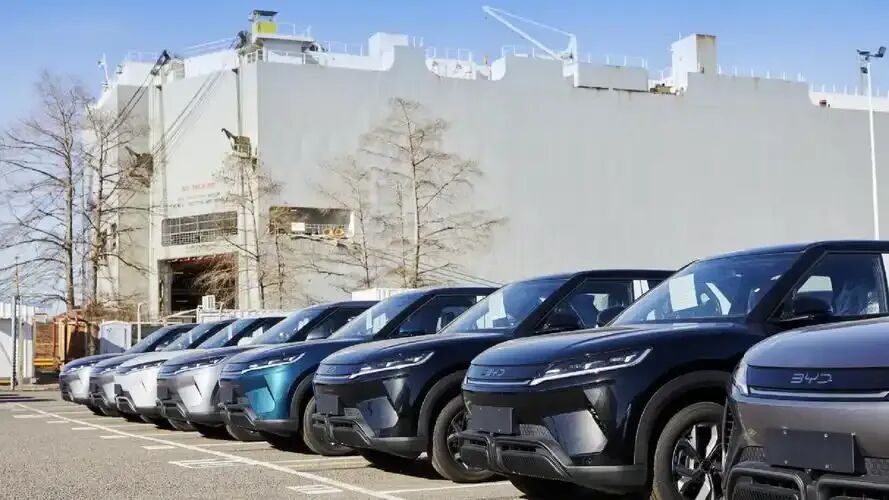
In recent years, with trade and other policy reforms, the Argentine automobile market is being restructured. According to public information, Argentina has approximately 330 cars per 1,000 people and is the third largest automobile producer and consumer in Latin America. In 2025, the automobile industry will account for approximately 2% of Argentina's GDP and approximately 15% of manufacturing GDP.
According to ACARA (Argentine Automobile Dealers Association) data, in the first half of 2026, sales of light vehicles in Argentina reached 278,000 units, down 10.5% year-on-year. Affected by factors such as high inflation, rising credit rates, and tight US dollar foreign exchange reserves, Argentina's automobile consumption has declined. But looking back on the past five years, Argentina's auto market has experienced explosive growth in 2025. Car sales reached 612,000 units that year, a year-on-year increase of 47.8%, setting the best growth result since 2018. In previous years, Argentina's car sales have ranged from around 400,000 units.
Previously, Argentina's import control policies were relatively strict, which raised the threshold for entry for overseas models. With policy reforms, import controls were gradually relaxed, and at the same time, a new tax exemption policy for new energy was introduced, and the automobile market will usher in a strong repair in 2025. On the other hand, with the relaxation of policies, Argentina's import of cars has increased significantly, which has also changed the market structure.
Public information shows that before the liberalization of import controls, the proportion of locally produced vehicles with licenses was as high as 65%, but now this share has shrunk to 34%. Relying on the zero-tariff trade advantage of MERCOSUR (MERCOSUR), the share of Brazilian imported cars licensed has increased to 41%. In addition, the share of overseas imported models, including China brands, soared to 25%.
Data provided by Cui Dongshu, secretary-general of the Passenger Federation Branch, shows that from January to May 2026, China exported 30,000 vehicles to Argentina, a year-on-year increase of 147%, with an average price of US$14,500.
According to data from CIDOA (Argentine Automobile Importers and Dealers Association), in June 2026, a total of 6273 cars made in China were sold locally, and the market share increased from approximately 7% for the whole of last year to 13.97%. Specifically, BYD has entered the top ten car brand sales list, with sales reaching 1740 vehicles that month, ranking eighth. The top seven brands are Toyota, Volkswagen, Fiat, Ford, Chevrolet, Peugeot and Renault. Among them, only Ford's sales increased year-on-year, while other brands all showed a sharp decline. Chery, BAIC and Haval are also in the top 20 sales list, but sales are all below 1000 vehicles. In the field of pure electric vehicles, China brands almost dominate the Argentine market. In June this year, among the top ten pure electric vehicles in the list of sales volume, China brands occupied eight seats. Among them, BYD ranked first with sales volume of 604 vehicles, followed by BAIC (106 vehicles), and the rest of the brands sold below 100 vehicles.
At present, the overall investment layout of China automobile companies in Argentina is still in its infancy, and the network model of local vehicle manufacturers and sellers has entered the market. BAIC Foton is the earliest company among China brands to carry out KD assembly of commercial vehicles, and has relied on local partners to carry out assembly production; BYD, Great Wall, Chery, SAIC MG, Jianghuai, Geely and other companies mainly focus on import sales.
On the one hand, Argentina implements a zero-tariff import quota system for new energy vehicles, which opens up market space for China's new energy vehicle exports. On the other hand, with the rapid development of China's new energy automobile industry, the competitiveness of China's automobile products continues to increase.
A report released by the China Automotive Strategy and Policy Research Center stated that China brands have further expanded the introduction of new energy vehicle products, but they still focus on vehicle sales and test the water carefully. In the medium term, automobile companies with scale and financial strength are expected to promote investment in areas such as vehicle assembly, parts and components supporting, and power batteries. The establishment of a regional production system is expected to be integrated into the MERCOSUR industrial chain in the long run, and the creation of a regional export base will greatly increase its market share and rank among the top of sales.
Source: Leading the way to the sea by Gaoshen's car
[Disclaimer] The content of this website (including pictures and texts) originates from the Internet, and the copyright belongs to the original author. Respect the rights and interests of originality, and select content is only used for information sharing. If copyright disputes are involved, please contact us to handle them in a timely manner

 Online Evaluation
 I am Buyer
 Export Services
 subsites


 023-62852688
  No. 1-1, No. 2899, Longzhou Avenue, Banan District, Chongqing City
 Headquarters


