
 Chinese
 Russian
 Arabic
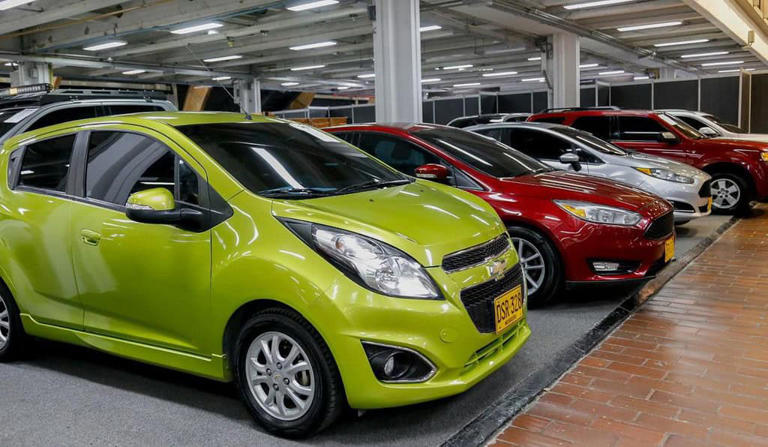
[Citing reports] The Ministry of Commerce, Industry and Tourism of Colombia has announced a draft decree to increase import tariffs on some gasoline/diesel-powered vehicles and motorcycles: increase the ad valorem duty on fuel passenger cars from the current 35% to 40%, and unify it to 35% for motorcycles (5-20 points higher than the current 15%-30%). The department explained that the increase is part of the "National Re-Industrialization Strategy" and the goal is to promote diversification of industrial structure and upgrade of quality standards, curb reliance on high-emission and low-value-added vehicles, and force more environmentally friendly models and local manufacturing.
The passenger cars named in the draft are mainly classified under tariff 8703: including small-displacement models with spark-ignited piston engines ≤1.0L, mainstream passenger cars with 1.0-2.5L (including two-wheel drive/four-wheel drive), and racing cars with displacements of 1.0L and 1.5L; local sales of fuel-fired commercial passenger models have strengthened in recent months (244 units in October,+41% year-on-year; a total of 1836 units from January to October, an increase from 1391 units in the same period last year), but it does not change the direction that fuel vehicles are generally subject to higher tax burdens. International trade experts pointed out that if the current 35% tariff on passenger cars based on CIF is increased to 40%, the tariff on single vehicles will increase by about US$750 based on CIF of US$15,000, and the tax base for subsequent taxes and fees will be raised., the impact of terminal landing prices will be amplified. The draft is still in the stage of public solicitation, and the final scope of application and effective time shall be subject to the official government communiqué.
The meaning to China's automobile exporters is very direct. The "5-point float" of fuel-fired passenger cars will compress the price difference advantage of the traditional 1.0-2.5L subdivision, while the draft focuses on gasoline/diesel power, which objectively enhances the relative competitiveness of new energy models. In the short term, it is necessary to re-calculate the DDP quotation and inventory de-adjustment pace of fuel vehicles on sale to avoid concentrated arrival in Hong Kong during the tariff switching window; add a "tariff change clause" to the contract to lock in gross profit. In the medium-term strategy, we will invest more resources in the EV/PHEV product line and accelerate the connection with local compliance certification and after-sales networks; for large-scale brands, we can evaluate CKD/localization paths and exchange industrial collaboration for more stable policy expectations and cost curves. For the motorcycle business, it is necessary to re-calculate the CIF price based on model and displacement, and be wary of sales fluctuations caused by broken price bands.
Brief comment: This is not a simple "tax increase to find money", but a clear signal to use tariff leverage to guide the path of technology and industry. Whoever can cut the product structure to "electrification + compliance certainty" faster and make predictable commitments in local services will be able to occupy a position in the next round of track rearrangement in Colombia.
This article is reproduced from Guangdong Haoche and is only used for information sharing. If infringement is involved, please contact and delete it. This site does not bear relevant legal responsibilities.

 Online Evaluation
 I am Buyer
 Export Services
 subsites


 023-62852688
  No. 1-1, No. 2899, Longzhou Avenue, Banan District, Chongqing City
 Headquarters


