
 Chinese
 Russian
 Arabic
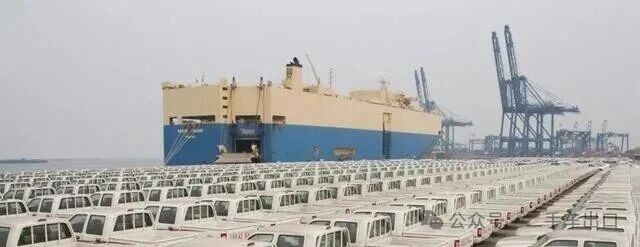
On January 1, 2026, the "Notice on Further Strengthening the Management of Used Car Export" jointly issued by the Ministry of Commerce and other four departments officially came into effect. Now that the policy has been implemented for half a month, the industry ecology that once relied on "zero-kilometer used cars" arbitrage has been broken. Domestic car dealers, ports, and logistics companies have accelerated their transformation, and changes in demand in overseas markets have also pointed out a new direction for the industry. This change, which is related to the reputation of China's cars "going to sea", is showing a pattern of ice and fire.
Domestic market: Restructuring in pain, compliance becomes the bottom line of survival
Differentiation of car dealers: arbitrageurs exit, and transitionists break through
The new policy takes "180-day registration period + after-sales confirmation" as the core clause, accurately attacking the gray model of "new cars being exported as used cars." In the past half a month, the industry's reshuffle rate has far exceeded expectations: small and medium-sized speculators were either stuck in the license link or vehicles in transit were returned because they were unable to obtain the "After-Sales Maintenance Service Confirmation Form" issued by the main engine factory. Many workshop-style enterprises lost money and left the market, and "transfer" notices frequently appeared around the port.
Leading companies have quickly turned to compliance tracks. On the one hand, established car dealers deeply involved in the industry focus on "long-kilometer used cars" that are 3-5 years old and have a driving range of 30,000 - 50,000 kilometers, and connect with the stock market formed by the domestic car ownership of 359 million, focusing on Russia, Africa and other areas with strong demand; On the other hand, some companies have become regular troops by binding main engine factories, relying on the after-sales system of automobile companies to meet the requirements of the New Deal. Shanghai Wangao has deployed more than 1000 maintenance outlets in 36 countries, shortening the waiting time for parts from 1-2 months to 3 days.
As industry insiders have said, the era of profiteering arbitrage is over, and the core of future competition is vehicle condition transparency and overseas service capabilities.
Overseas markets: Demand is differentiated, China cars find new positioning
Central Asia and Russia: Compliance vehicles are in urgent need, and after-sales demand is prominent
In the Russian market, the import volume of new cars has dropped by 63% year-on-year, and the proportion of used cars has increased to 55%. China's used cars with a 3-5 year old are only 1/5 of new cars, making them a cost-effective choice. The monthly export volume of Suifenhe Port reaches 3000 vehicles and continues to increase, and the profit of scarce models can reach 20,000 - 30,000 yuan. At the same time, Russia has blocked loopholes in personal purchasing, compliant cross-border e-commerce platforms have become mainstream, and consumers 'attention to the "three electric system guarantee" of new energy vehicles has increased significantly.
The preferences of the five Central Asian countries are significantly different. Customers in Kazakhstan prefer hybrid models. Uzbekistan has strong demand for second-hand ideal cars. The Guiyang base has built 9 overseas operation centers in Belarus and other places to provide localized maintenance services.
Middle East and Africa: Cost performance is king, service premium appears
The Middle East market presents dual demands for "high-end + practical". Legend Holding Group in Dubai, United Arab Emirates, has a 20,000-square-meter maintenance center to build a "sales + after-sales + accessories" system to serve China's used car exports. It also optimizes vehicle air conditioning systems for the local high-temperature and sandy environment. In January, Xiamen Port exported 1607 used cars to United Arab Emirates, covering multiple brands such as BYD and Mercedes-Benz, confirming the acceptance of the Middle East market.
The African market is the basic market for fuel vehicles. Pickups such as Toyota Hilux and Great Wall Fengjun account for more than 50%. There is still a stable demand for 20% of "premium old cars" that are 6-10 years old but have complete maintenance records. In Kenya, the retail price of domestic SUVs is 25-30% lower than that of related vehicles, giving a significant cost-effective advantage. The Guiyang base also plans to customize a reinforced chassis for vehicles in the African market to adapt to local road conditions.
Southeast Asia and South America: Potential released, risks and opportunities coexist
In the Southeast Asian market, Cambodia's used cars account for more than 80%, and China's car sources rely on their price advantages to supplement the gap in the Japanese car market. The opening of the China-Laos railway has greatly reduced logistics costs, and the freight rate of a single vehicle can be reduced to 7000 yuan, promoting the growth of economic car exports.
The potential of the South American market is beginning to show. Chile and Mexico prefer economical and fuel-efficient models, but face policy uncertainty in the short term. Due to political turmoil in Venezuela, the risks of logistics customs clearance and foreign exchange payments have surged. Companies are advised to suspend new orders and wait and see for 6-12 months until policies stabilize.
Semi-monthly summary: The only way to go from "scale" to "value"
Half a month after the implementation of the new policy, China's used car export industry bid farewell to barbaric growth and entered a critical period of "compliance and quality improvement." In the short term, the exit of small and medium-sized speculators will bring industry pain, but in the long run, this will push the industry to focus on real demand and build core competitiveness through transparency of vehicle conditions and localization of services.
For enterprises, cultivating high-quality fuel vehicles with a 3-5-year-old age, deploying overseas after-sales networks, and relying on comprehensive port services to reduce costs and increase efficiency are the current core survival strategies. With the release of domestic second-hand car stocks and the deepening of overseas markets, China's second-hand car exports are expected to truly achieve the leap from "products going to sea" to "brands going to sea."
Source: Automobile Export Pass, Used Car Export
[Disclaimer] The content of this website (including pictures and texts) originates from the Internet, and the copyright belongs to the original author. Respect the rights and interests of originality, and select content is only used for information sharing. If copyright disputes are involved, please contact us to handle the deletion in a timely manner.

 Online Evaluation
 I am Buyer
 Export Services
 subsites


 023-62852688
  No. 1-1, No. 2899, Longzhou Avenue, Banan District, Chongqing City
 Headquarters


