
 Chinese
 Russian
 Arabic
The new version of Russia's scrapping tax calculation system, which was originally supposed to be officially launched on April 1, has been temporarily postponed...
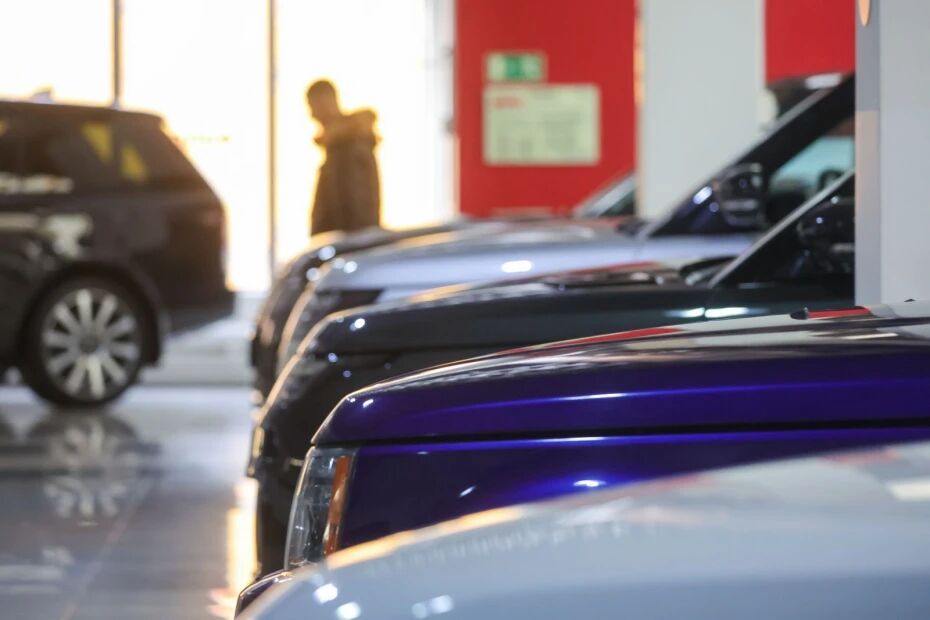
In the Russian automobile market, policy adjustments have once again affected the price expectations of imported cars.
According to the Russian newspaper, Russia's new version of the scrapping tax (утилиза р и о н ный сбо р, commonly known as the "scrapping fee") calculation system, which was originally supposed to be officially launched on April 1, 2026, has been temporarily postponed. According to original market expectations, once the new regulations are implemented on time, the cost of importing cars in the name of individuals through Eurasian Economic Union (EAEU) countries will be greatly reduced or even equivalent to commercial imports. Some models that enter the Russian market through "parallel imports" may even increase the price of nearly 50%.
But now, this policy has not taken effect as originally scheduled. The Russian Ministry of Industry and Trade stated that the relevant bill is still undergoing legal coordination procedures, including feedback, regulatory impact assessment, and submission to the government for review, and the final effective time will be announced separately.
For China's used car exporters, this means a very realistic conclusion: imported cars transferred to the Russian market through Eurasian Economic Union countries are still operating under the old rules, and the window period has not yet closed in the short term.
What is the "new scrapping tax" that has been postponed this time?
Simply understand, this adjustment is not aimed at all imported vehicles, but vehicles that are actually commercial in nature imported in the name of individuals through Eurasian Economic Union countries.
In the past few years, the Russian market has formed a relatively mature path against the background of active parallel imports and entrepot trade: some vehicles first enter Kyrgyzstan, Belarus, Kazakhstan or Armenia, and then enter Russia through intra-alliance circulation. Due to differences in rules, this path can reduce taxes and processing costs in some cases, and has become a common method for many importers and individual buyers.
The direction of the new regulations is to gradually equalize such "private imports" and "commercial imports" in the calculation of scrapping taxes and block some low-cost channels.
If the policy is implemented directly, the market generally believes that the cost of vehicles transferred from Kyrgyzstan and Belarus to Russia will increase significantly, and the price increase of some models may reach 20% to 40%, with some popular parallel imported models even higher.
Therefore, although this extension is only a delay in time, it has a significant impact on market sentiment and trading rhythm.
Why does the industry say that this is a "window extension"?
People in the Russian imported car industry told the Russian newspaper that the postponement of similar policies has now become a "regular plot" in the market. Every time the regulatory authorities set a deadline first, the market will quickly form price increases expectations. As a result, some consumers place orders in advance, driving a round of active short-term transactions; but in the end, if the policy is delayed, the market will return to wait-and-see again.
Russian E.N. Evgeni Zabelin, head of Cars, said bluntly that such news is like "a shot of stimulant" to the market. The meaning is very simple: first create a time point when "if you don't buy it, the price will increase" to stimulate a wave of transactions; but if this time point is not fulfilled, consumers 'sensitivity will gradually decrease.
However, he also mentioned that this does not mean that the policy has no impact. At least at this stage, it will still encourage some potential buyers to choose to buy cars in advance, because everyone understands that the old price cannot last forever and the policy will come sooner or later.
This judgment is actually very consistent with the current psychology of the Russian car market. Consumers no longer panic about buying cars when they hear policy changes like they did in previous years. However, for some specific models, especially mid-to-high-end SUVs, MPVs and popular imported brands, some people will still choose to "bring the car in while it is still possible."
Will this adjustment change the entire Russian market?
Judging from the current analysis of the Russian industry, the answer is: the high probability will not have a disruptive impact on the entire market, but it will affect a very specific segment.
Maxim Kadakov, editor-in-chief of "Behind the Wheel" magazine, said that in 2025, Russia will import more than 70,000 passenger cars and light commercial vehicles from natural persons through Eurasian Economic Union countries. Among them, 55,000 are from Kyrgyzstan, 18,000 are from Belarus, and the number is relatively small in Kazakhstan and Armenia.
70,000 vehicles may sound like a lot, but it is not enough to have a decisive impact on Russia's annual automobile market. Kadakov mentioned that even though the Russian car market declined last year, annual car sales were still around 1.5 million units. Therefore, for the overall market, this part of re-exported imported cars can only be regarded as a presence but not dominant market segment.
Sergey Telikov, head of "Автостат", also believes that even if the Eurasian Economic Union path is tightened in the future, other alternatives will emerge in the market. Therefore, the real impact is more local and structural than overall.
In other words, Russia will not suddenly "run out of cars" because of this policy, but some cars entering through specific routes will become more expensive, difficult and less flexible.
Who will be most affected? Not big companies, but small importers
What the new scrapping tax calculation method really hits is not the large official system, but the small and medium-sized parallel importers, dealers, purchasing and cross-border freight forwarding companies that rely on the Eurasian Economic Union channel to do business.
The typical business model of these players is to help individual Russian buyers ship specific models from alliance countries, earning channel price differences, tax differences and service fees. They often operate not entry models, but products with higher profits and more segmented needs, such as:
Toyota Land Cruiser
Hyundai Santa Fe
Mid-to-high-end SUV
MPV
limousine
sports car
In other words, if the new regulations are officially implemented, the most influential ones will not be "people's trucks to buy vegetables", but those high-value models that already rely on flexible routes to import.
This is of great reference significance for China exporters. Because the parallel import demand in the Russian market is itself highly concentrated on brand substitution, supply gaps and mid-to-high-end consumption. Who can get to this market often relies not on standardized bulk trade, but on an accurate grasp of policy gaps, path costs and customer preferences.
Why did Russia postpone it again this time?
Industry speculation that this extension is likely to be related to coordination between Russia and Eurasian Economic Union member states.
Kadakov mentioned in an interview that the reason why the Russian Ministry of Industry and Trade suspended its entry into force did not rule out that it was waiting for further consultations with countries within the alliance to avoid more frictions caused by unilateral policy adjustments. After all, although the Eurasian Economic Union is an economic community, member states are not completely consistent in terms of automobile taxes, tariffs and new energy vehicle policies.
For example, some alliance countriesimplement zero-tariff policies on electric vehicles, while Russia still imposes a full tax rate. For another example, Kazakhstan has previously proposed imposing a higher level of scrapping tax on Russian cars. In other words, the alliance seems to be an integrated market, but there are still a lot of differences and games at the actual implementation level.
This also shows that Russia's automobile policy will still have room for adjustment in the future, and it is often not fixed once, but is constantly changing through compromises from multiple parties.
written in the end
Russia's postponement of the implementation of the new version of the scrapping tax this time leaves more time for the market and more breath for parallel imports and alliance re-export players.
But this tone is not permanent. Although the policy has been postponed, the direction has not changed: Russia is still gradually tightening the space for low-cost transfer to cars through the Eurasian Economic Union, and there is still a high probability that the prices of related models will rise in the future.
Source:https://www.alta.ru/external_news/126925/
Source: Guangdong Good Car
[Disclaimer] The content of this website (including pictures and texts) originates from the Internet, and the copyright belongs to the original author. Respect the rights and interests of originality, and select content is only used for information sharing. If copyright disputes are involved, please contact us to handle the deletion in a timely manner.

 Online Evaluation
 I am Buyer
 Export Services
 subsites


 023-62852688
  No. 1-1, No. 2899, Longzhou Avenue, Banan District, Chongqing City
 Headquarters


