
 Chinese
 Russian
 Arabic
Russia, the capital of Moscow, spans Eurasia, with a total area of 17.0982 million square kilometers. It is the largest country in the world.
As of April 2023, Russia's total population is approximately 146 million, with a total of 194 ethnic groups, mainly Russians. Most of them are Orthodox and the official language is Russian.
Russia is one of the major economic countries and has strong strength in basic scientific research, especially in cutting-edge technology research such as aerospace, nuclear energy, and military industry. It has abundant energy and mineral resources, among which potassium salt reserves rank first in the world with Canada.
In recent years, Russia's proven reserves of oil, gas and mineral resources have increased annually, further consolidating its status as the world's largest resource country.
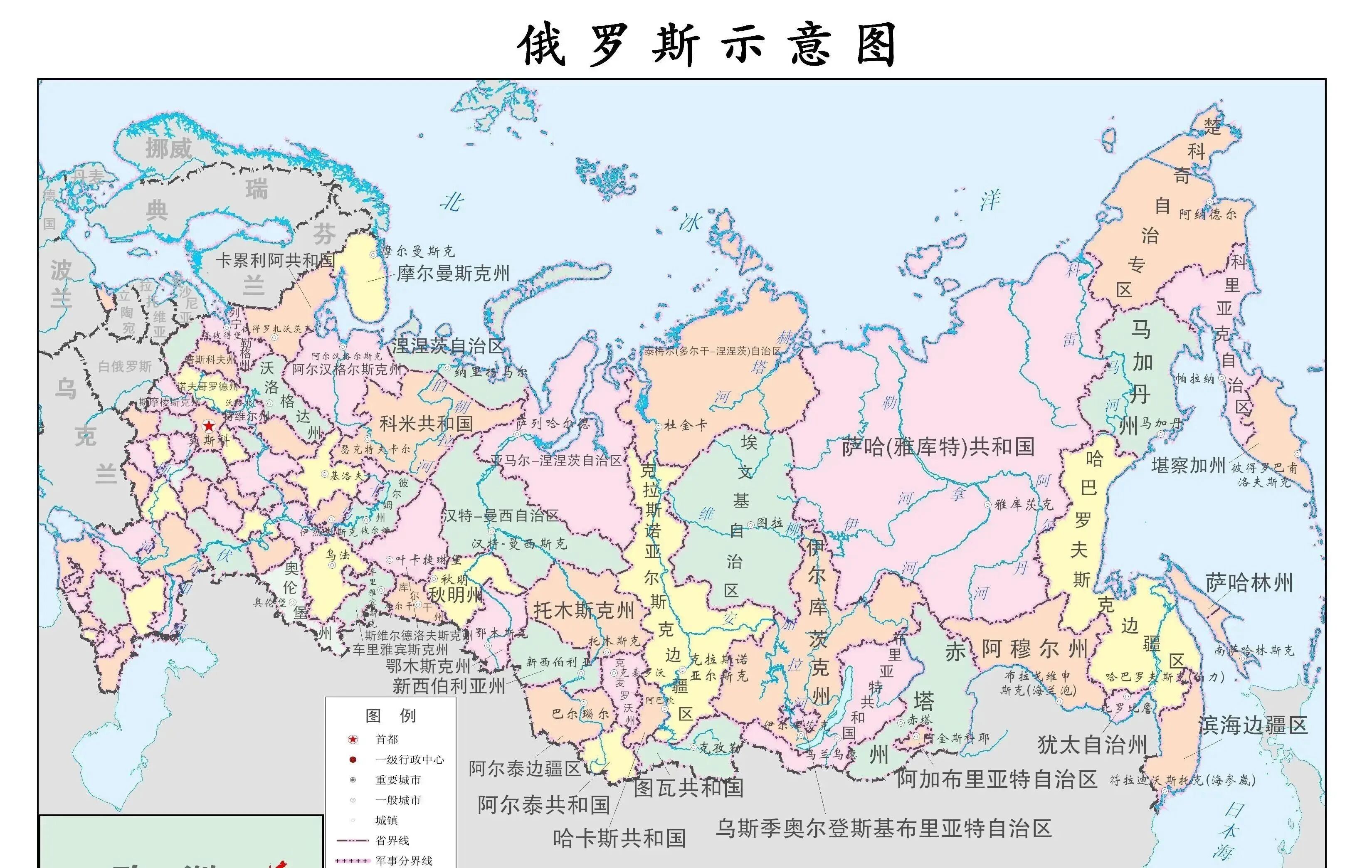
Overview of the Russian economy

In 2024, Russia's total GDP will be US$2.06 trillion, and per capita GDP will be US$14,800, a year-on-year increase of 4.1%.
Russia's total foreign trade in 2024 will be US$716.9 billion, of which exports will be US$433.9 billion, a year-on-year increase of US$8.6 billion; imports will be US$283 billion, a year-on-year decrease of US$2.3 billion.
China is Russia's largest trading partner and has ranked first in Russia's foreign trade for many consecutive years. India is Russia's second largest trading partner and its trade volume with Russia continues to grow. As an emerging economy, Turkey is actively expanding trade cooperation with Russia and becoming one of Russia's important trading partners.
Russia's automobile market
In 2024, Russia sold a total of 1.57 million new passenger cars throughout the year, a year-on-year increase of 48.4%.
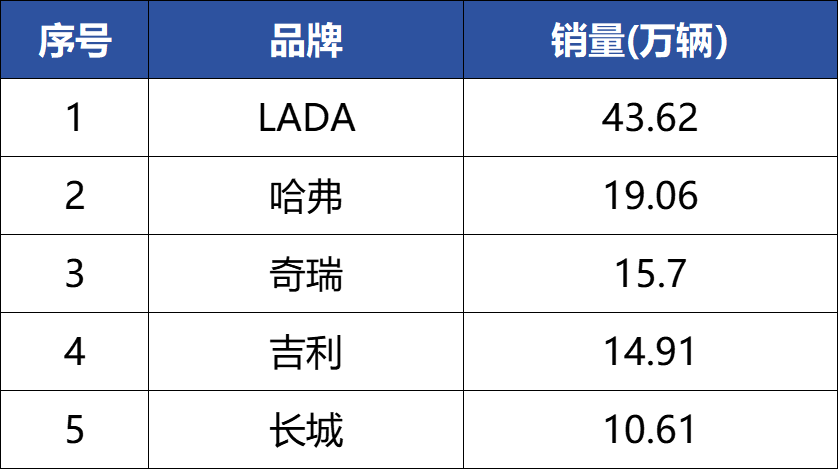
In sales in 2024, the Russian local brand LADA maintains its position as a market leader with sales of 436,200 units. Haval leads domestic brands with sales of 190,600 units, while Chery sold 157,000 units, reaching market shares of more than 10%.
In addition, three China brands also sold more than 100,000 vehicles.
Current situation of Russia's new energy vehicle industry
According to statistics from Russian analyst agency Avtostat, as of July 1, 2024, the proportion of China brand new energy vehicles in the Russian new energy vehicle market reached 27.2%.
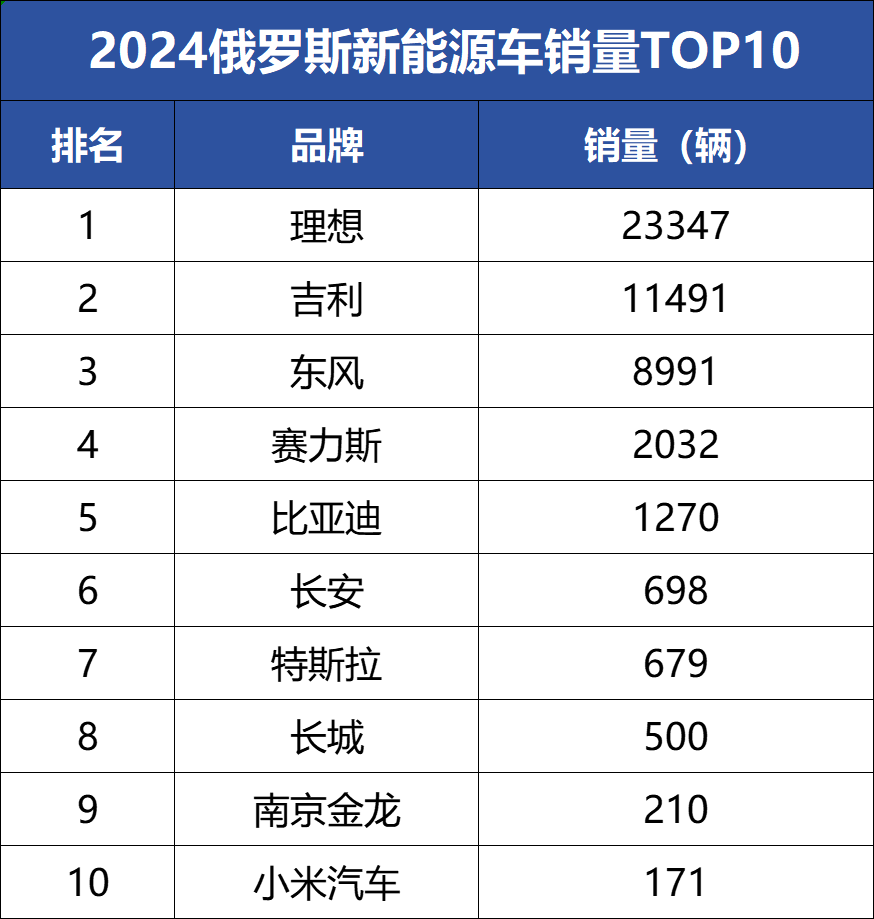
China automobile brands occupy the mid-to-high-end market in Russia. Among new energy vehicles, domestic brands such as Ideal, Geely, and Dongfeng are more prominent.

Preferential loan and leasing options: The Russian government has developed preferential loan and leasing options for the passenger car and electric vehicle markets. The Russian Ministry of Economic Development takes the lead in national electric vehicle and hydrogen energy vehicle projects, provides preferential loans and rental subsidies for car purchase, and participates in the construction of fast charging stations in 65 regions across Russia.
By 2030, Russia plans to invest 511 billion rubles (about 8 billion US dollars), so that electric vehicles will account for 10% of the country's total automobile production, and the cumulative output will reach 730,000 units.
Procurement plan: The government purchases based on the plan to switch vehicles to NGV fuel to promote the development of clean energy vehicles.
Opportunities for Russian cars to go to sea market
1. Stable bilateral relations China and Russia have maintained good political and economic cooperation for a long time, ensured trade relations, and helped China brands expand in the Russian market. Putin said at the "Russia Energy Week" forum in September 2024 that Russia will increase its proportion of energy exports to the Asia-Pacific region and friendly countries, and strengthen independent technology and infrastructure construction.
2. Good terms of trade and policies The adjustment of Russia's parallel import policy for automobiles has benefited the official exports of China automobile companies, and the adjustment of scrapping tax policy has blocked the low-tariff gray channel in neighboring countries. Russia prohibits China cars from using parallel import channels for legal persons, which in fact avoids low-price competition from unauthorized dealers and is conducive to the official export sales of China car companies. In terms of scrapping taxes, Russia stipulates that the tariff savings on cars imported from Eurasian Economic Union (EAEU) countries must be paid in Russia for the "scrapping taxes", blocking the low-tariff gray channel in neighboring countries.
3. The average age of automobiles and auto parts products exported to Russia is more than 12 years old, and the demand for maintenance is strong. In 2025, online auto parts sales are expected to account for 35% of the overall market, and sales of consumables such as filters, brake pads, and wipers will increase by more than 25% annually.
Source: Yangtze River Delta new energy vehicle industry offshore base
This article is reproduced from the Yangtze River Delta New Energy Vehicle Industry Offshore Base and is only used for information sharing. If infringement is involved, please contact and delete it. This site does not bear relevant legal responsibilities.

 Online Evaluation
 I am Buyer
 Export Services
 subsites


 023-62852688
  No. 1-1, No. 2899, Longzhou Avenue, Banan District, Chongqing City
 Headquarters


