
 Chinese
 Russian
 Arabic
Jordan's full name is The Hashemite Kingdom of Jordan, located in western Asia and northwest of the Arabian Peninsula. A land area of 89,300 square kilometers. Jordan is bordered by Palestine and Israel in the west, Syria in the north, Iraq in the northeast, Saudi Arabia in the southeast and south, and the southwest corner is bordering the Gulf of Aqaba on the Red Sea, where the port of Aqaba is built. The port is Jordan's only outlet to the sea. It can pass through the Red Sea, enter the Mediterranean Sea through the Suez Canal to Europe, and enter the Indian Ocean through the Gulf of Aden.
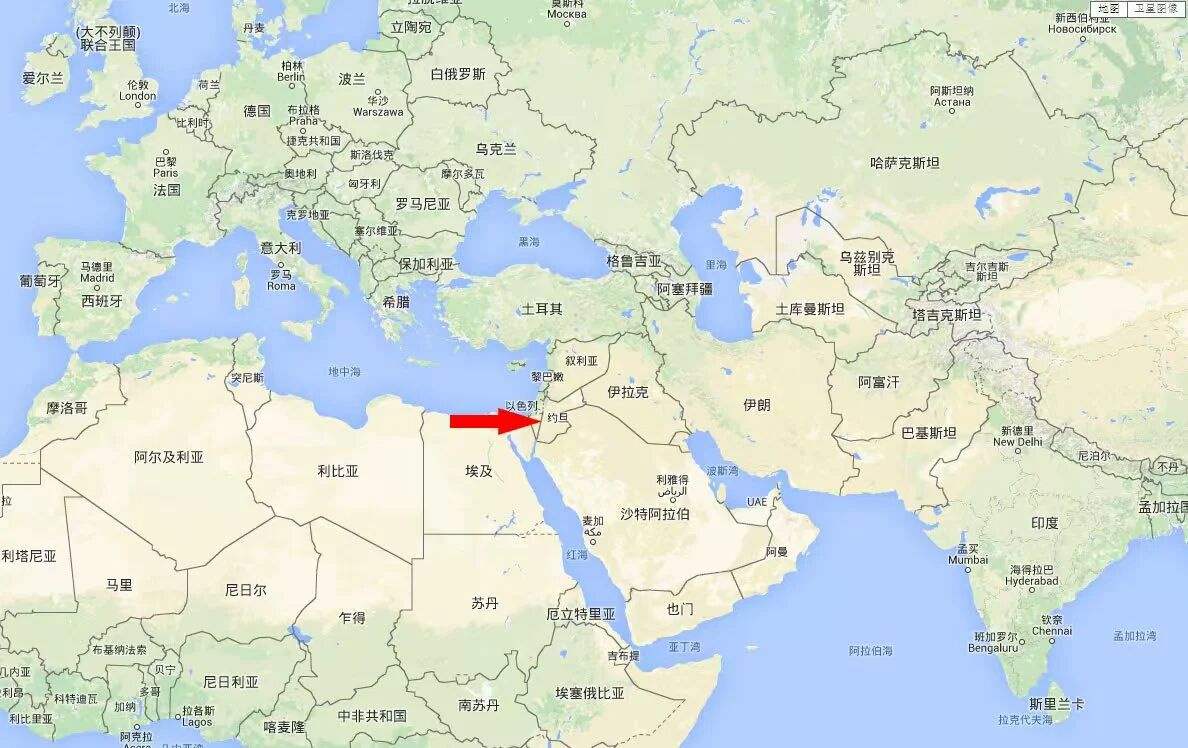
Jordan's total population is about 11.55 million, and the capital Amman has a population of more than 4 million. The main ethnic group is Arabs, and Islam is the state religion. The official language is Arabic and the common language is English. Jordan has maintained long-term political, economic, and social stability. Its society is relatively open and inclusive, and enjoys the reputation of an "oasis of peace in the Middle East."
Jordan's economic profile
Jordan is a developing country, and the main pillars of its national economy are remittances, tourism and investment. In 2023, Jordan's total GDP will be US$50.81 billion, and per capita GDP will be US$4482. Jordan's total foreign trade in 2024 will be US$40.2 billion, of which imports will be US$26.9 billion, exports will be US$13.3 billion, and total foreign exchange reserves will be approximately US$21.1 billion.
As the capital is located, Amman Province is the political, economic and cultural center of the country. It gathers a large number of government agencies, commercial facilities and high-quality talents. It is attractive for foreign-related companies to set up headquarters and R & D centers; Aqaba Province has Jordan's only port, the Port of Aqaba, which has unique advantages in logistics, transportation, import and export trade, and is suitable for laying out production bases and business links related to import and export.
Infrastructure and transportation
Jordan has good traffic conditions, mainly road transportation. The government attaches great importance to road construction. The expressway runs through 12 provinces in the north, south and east and west, forming a national highway network connecting urban and rural areas, with a total length of 7891 kilometers of highways nationwide.
Jordan has a variety of transportation methods, including buses, airport shuttles, long-distance buses, bus rapid transit (BRT), taxis, etc. Various tourist vehicle rental shops can be seen everywhere.
As of 2023, there are 2.2 million registered vehicles in Jordan, and road congestion in Amman is serious during peak commuting periods.
Overview of Jordan's resources
Jordan's oil and gas resources are relatively scarce, but Jordan's oil shale reserves are very rich, making it the fourth largest oil shale reserve country in the world. In addition, potassium salts, phosphates, stone, etc. are also resource-based products that Jordan has export advantages. Jordan Arabian Potash Company is the world's major producer and seller of potash fertilizer. Its phosphate rock production ranks fifth in the world and its exports rank among the top in the world. Jordan is rich in uranium resources, with proven reserves of 140,000 tons. It is a shallowly buried uranium mine, only 1.5 meters below the surface. As an energy-deficient country, Jordan plans to transform from an energy importer to an energy exporter by 2030 by implementing a nuclear energy development plan.
Jordan is currently facing an oversupply of electricity. The Jordanian government is actively promoting the process of grid connection with neighboring countries and considering external power transmission.
Major industry associations and multilateral regional cooperation
1. Jordan Chamber of Commerce, Jordan's major industry association: Founded on December 19, 1955, the guiding principles of this institution are to represent the interests of all business groups, provide business information and advice to their members, promote Jordan's economic development, publish market information and economic statistics, and strive to attract foreign investment and create convenient and favorable conditions for international trade. The Jordanian Chamber of Commerce is a non-profit civil society organization with 15 chapters across the country.
Jordanian Chamber of Commerce and Industry: Established in 2005, its main responsibility is to provide information consultation, industrial planning and policy guidance to Jordanian industrial enterprises to improve the production, sales and operation management capabilities of Jordanian enterprises and enhance their competitiveness. The Jordanian Chamber of Commerce and Industry is a non-profit organization with three branches: the Amman Chamber of Commerce and Industry, the Irbid Chamber of Commerce and Industry and the Zarqa Chamber of Commerce and Industry.
Amman Chamber of Commerce: Founded in 1923, it is a non-profit organization. Its purpose is to provide necessary information for the development of private industries in Jordan and is responsible for guiding and adjusting the service direction and structure of Jordanian industries to meet market demand. The organization usually maintains communication and exchanges with various parties in the form of a forum.
2. Multilateral and Regional Cooperation The Jordanian government actively participates in multilateral and regional economic cooperation, and its trade market is highly radioactive. The main trading partners in 2023 are China, the United States, India, and United Arab Emirates. Jordan has signed 3 important trade agreements:
Jordan-United States Free Trade Agreement: Since January 1, 2005, duty-free products between the two countries have been extended to all products except tobacco and alcohol.
Jordan-EU Cooperation Agreement: In June 2016, Jordan and the EU reached a simplified origin agreement, and in December 2018, the agreement was further revised to relax relevant conditions.
Arab Free Trade Agreement: Under the Arab Countries Free Trade Agreement (GAFTA), starting from January 1, 2005, Jordanian goods can enter the markets of 16 surrounding Arab countries with zero tariffs.
Economic and trade agreements with individual countries: Jordan has signed free trade agreements with Singapore (2006) and Canada (2013).
China-Jordan cooperation
In 2023, China-Jordan bilateral trade in goods will reach US$5.79 billion, and China has a long-term surplus with Jordan. China companies have strength in the entire industrial chain of the power industry. For example, China Energy Construction Group Guangdong Thermal Power Engineering Company serves as the EPC general contractor. Resident Chinese and overseas Chinese in Jordan are mainly engaged in catering, wholesale and retail, agricultural planting and tourism services.
In May 1979, the governments of China and Jordan signed a trade agreement. In November 2001, the two governments signed the Agreement between the Government of China and the Government of Jordan on Investment Protection. In October 2023, the two governments signed a memorandum of understanding on the joint construction of the "Belt and Road" initiative.
According to statistics from the Ministry of Commerce of China, China's direct investment in Jordan in 2023 will be US$75.67 million; as of the end of 2023, China's direct investment in Jordan will be US$300 million. China's main investment directions in Jordan are energy, infrastructure construction, textile manufacturing, etc.
In 2023, China companies will sign new contracted projects in Jordan of US$1.28 billion, with a turnover of US$42.08 million. Chinese-funded companies have already carried out engineering contracting projects in Jordan, including: Hussein Power Station Project General Contracting (EPC) Project, Atarat Oil Shale Power Station BOT Project, and Jordanian Water Authority Disi 24MW Photovoltaic Project General Contracting (EPC) Project.
Chinese-funded enterprise Bareeq participated in the development and operation of the local Aqaba Industrial Park through a concession contract. It also cooperated with the Aqaba Special Administrative Region government to develop the Quira International Industrial Zone. The first phase of infrastructure construction was completed, and the investment target exceeded US$1 billion in the next 15 years. The park has attracted many companies to settle in, including Jiangsu Guotai Garment and Kia.
At present, China and Jordan have not yet signed a currency swap agreement, a double taxation avoidance agreement or a standardized mutual recognition agreement.
Source: Yangtze River Delta new energy vehicle industry offshore base
This article is reproduced from the Yangtze River Delta New Energy Vehicle Industry Offshore Base and is only used for information sharing. If infringement is involved, please contact and delete it. This site does not bear relevant legal responsibilities.

 Online Evaluation
 I am Buyer
 Export Services
 subsites


 023-62852688
  No. 1-1, No. 2899, Longzhou Avenue, Banan District, Chongqing City
 Headquarters


